Times tables practice at home can fit into a short, calm routine. Try five minutes with a few multiplication facts, a simple example and a chance for your child to explain an answer. This guide shows parents how to get started.
Start with the table your child is learning at school. Practise a few facts, check the answers together and return to them on another day. The aim is to build confidence with the numbers, rather than rush through a long session.
Why multiplication facts matter
Knowing multiplication facts gives children a useful starting point for division, fractions and longer calculations. It also helps with everyday questions, such as the cost of three identical items or the ingredients needed for a double recipe.
Understanding comes first. For example, show that four groups of three make twelve. Then connect that idea to 4 × 3 = 12. Drawing groups, counting objects and looking for patterns can make the written calculation easier to understand.
Times tables practice at home: understand first
An app gives your child another way to revisit familiar facts. However, it works best alongside explanations and practical examples. If an answer is wrong, pause and work through the calculation together before trying again.
Spelling Bee Games & Tests includes multiplication practice as well as activities for school spelling lists. You can also practise less familiar tables, including 13, 25 and 125, when your child is ready for an extra challenge.
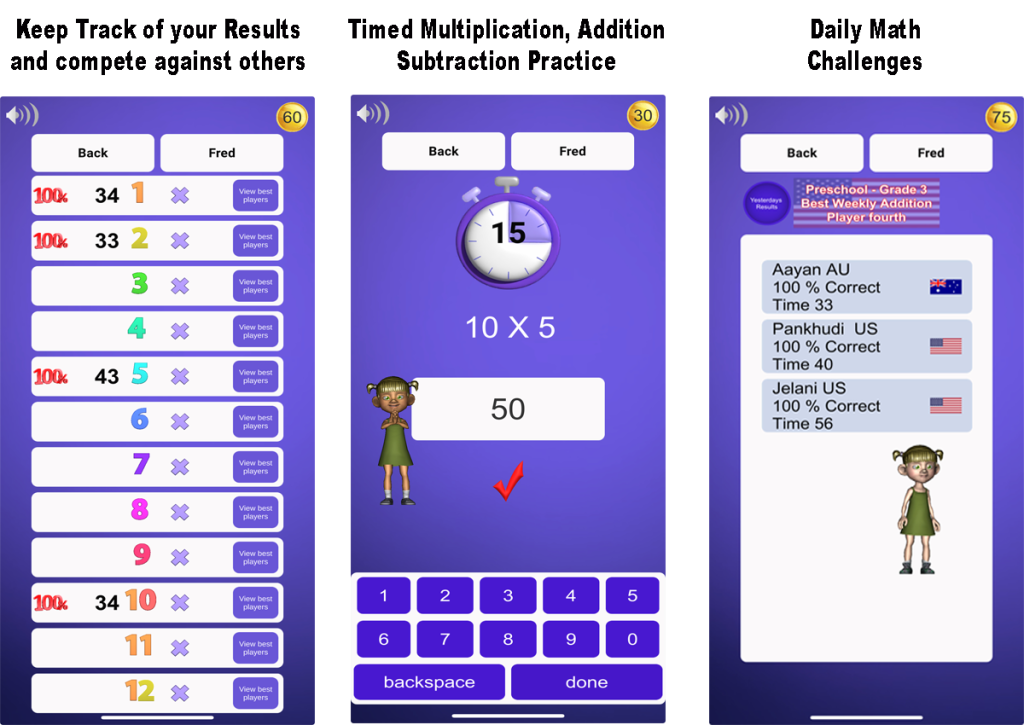
A five-minute times tables practice routine
Spend the first minute revisiting a familiar fact. Use the next two minutes for a few questions, then talk through one tricky answer. Finish with a fact your child knows. Five minutes is a starting point, so stop earlier if your child needs a break.
- Ask the teacher which table or skill to practise next.
- Start with a handful of facts your child understands.
- Mix questions they know with a few they are still learning.
- Talk through mistakes instead of only checking the score.
- Finish with a question they can solve confidently.
For example, if your child knows 5 × 6 = 30, ask how that can help with 6 × 6. Adding one more group of six gives 36. These connections are useful when a fact does not come to mind straight away.
What about calculators?
Calculators are useful tools, but children still need to understand the calculation they enter. Estimating the answer first helps them notice a misplaced digit or a result that does not make sense.
You do not need to turn every activity into a speed test. Give your child time to explain an answer. Then use short, repeated practice to help familiar facts become easier to recall.
An optional tool for times tables practice at home
Explore Spelling Bee Games & Tests and its multiplication activities, or download it below. A free trial is available; check your store for the current purchase options.

Want another way to practise numbers? Read our mental maths tips and try a few examples together.
Questions parents ask
Is this only a multiplication app?
No. It combines times tables practice with spelling lists, spelling tests and word activities. The App Store listing and Google Play listing show the current app details.
Should my child practise every table at once?
Start with a manageable set and follow the work your child is doing at school. Revisit those facts before adding more.